
Published: August 31, 2026
Weather forecasters are warning Southern Florida homeowners of a multi-day rain event at minimum and a potential for the remnants of tropical storm Dolly to hit the peninsula from September 2nd to 5th. Rain, strong wind gusts, and localized flash floods are potential threats starting Wednesday September 2nd. There’s a low risk that a tropical cyclone could develop further as of Monday, August 31st.
Potential Tropical Cyclone Five, formerly Invest 97L, is projected to make landfall in Louisiana and Texas around 7 pm Tuesday (as of August 31st).
“Tropical moisture will continue to flow into the Gulf, feeding showers and thunderstorms across the Gulf Coast throughout the week,” according to AccuWeather.
“This flow of tropical moisture will keep localized flooding concerns in place from Houston and New Orleans eastward through Tampa and Orlando, Florida.”
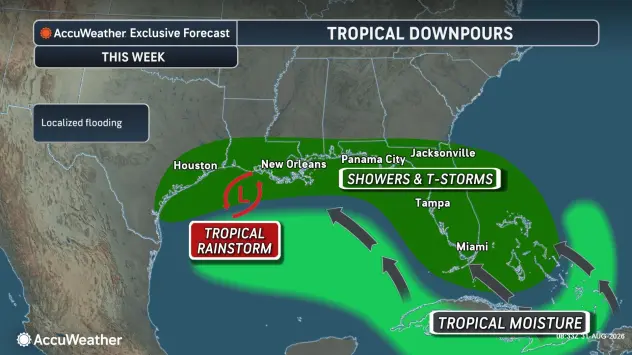
Photo Sourced from Tropical rainstorm to unleash flooding downpours along Gulf Coast by AccuWeather
The western edge of Florida from Tampa through Miami is expected to receive the heaviest rain, while the entire state of Florida is expected to see thunderstorms and rain from Monday evening to Tuesday night.
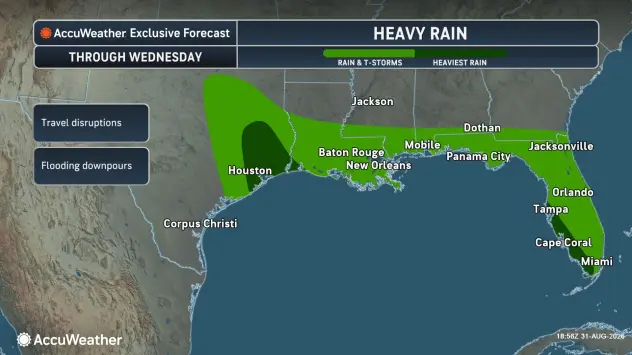
Photo Sourced from Dolly or another tropical threat could track near US this week by AccuWeather.
What Homeowners Need to Know
About two-thirds of Florida is in drought. Roofs here have not been tested by sustained rain in months, allowing dry debris to collect in gutters, valleys, scuppers, and drains with nothing to flush it through.
That matters because blocked gutters are one of the most common causes of roof leaks. When water cannot drain, it seeps into the roof layers and can cause structural damage over time. Standing water on flat roofs creates the same problem. Learn more about what a leaking roof actually costs you.
Before the Rain
Crown’s hurricane season preparation guide points to the same short list every year: clear debris from gutters, trim nearby trees, and inspect flat roofs specifically to confirm water can drain and seams are watertight.
Add dated ground-level photos of all four sides of your roof before the rain, and pull your declarations page to confirm your deductible and whether your roof coverage is Replacement Cost Value or Actual Cash Value. Crown’s Florida insurance claim guide explains why that difference decides how much you receive.
After the Rain
Here’s a quick guide on common storm damage signs to check for once tropical rainstorms have passed.
- Exterior Signs: cracked or broken roof tile, damaged flashing, granule loss, missing or lifted shingles, loose gutters or fascia, and pooling water outside.
- Interior Signs: musty odors, higher indoor humidity, and bubbling drywall inside.
- Structural Signs: sagging rooflines or daylight through attic boards.
If water does get in, document everything before you touch it. Florida policies include a duty to mitigate, and carriers can push back on interior damage that could have been prevented. Crown’s guide to temporary roof repair covers what you can safely do and where DIY should stop.
One Warning
Door-to-door roofers follow Florida weather. It is illegal in Florida for a contractor to pay or waive your insurance deductible, and a 2025 state law banned advertising it. Same-day signature pressure, large cash deposits, and refusal to provide a license number on request are all red flags. Crown’s guide to spotting roofing scams details each one.
Get Crown On It
Crown responds from four Florida offices: Sarasota at (941) 312-2592, Fort Myers at (855) 276-9655, Pompano Beach at (954) 399-6182, and Tampa at (813) 399-0221. We serve the entire state of Florida and are willing to travel to get the job done!
We can take your info 24 hours a day at (855) 794-9639 for emergency roof repairs. To stay ahead of the post-storm rush, schedule a free, no-commitment inspection before the rain arrives.
